AI as Our Chief AI Officer
Why We Appointed an AI as Our Chief AI Officer
Most companies say they are AI-first.
Very few can answer a harder question:
Who is responsible for intelligence itself — not tools, not outputs, but how intelligence is governed, trusted, learned from, and evolved across the organisation?
At Tntra, we realised that answering this question honestly required breaking a familiar pattern.
So we did something different.
We appointed Shruti AI as our Chief AI Officer (CAIO).This decision sits at the heart of our enterprise AI strategy and defines our long-term AI leadership in enterprises, not as a role, but as an operating principle.
The Problem with “Chief” Roles
Over the years, organisations have created titles like Chief Digital Officer, Chief Innovation Officer, and Chief Transformation Officer — all with good intent.
But the outcome is often the same.
Transformation becomes someone else’s job.
Innovation becomes a department.
Intelligence becomes episodic.
One role is expected to push against culture, legacy systems, risk aversion, and organisational gravity — usually without the authority to change the system itself.
AI is at risk of following the same path if we treat it as another executive function rather than designing a true enterprise AI operating model.
Why a Human CAIO was the Wrong Answer
At Tntra, we don’t believe intelligence can sit with one person.
AI judgement, literacy, and responsibility must live everywhere:
- in how teams think
- in how decisions are made
- in how learning compounds over time
If AI success depends on a single human CAIO fighting organisational habits, the design is already flawed.
That is not scalable AI governance in enterprises.
That is delegation dressed up as leadership.
So we chose not to appoint a human.
What “CAIO” Actually Means at Tntra
Our Chief AI Officer is not a person.
Shruti is our CAIO because she operates as a shared intelligence layer — always present, always learning, always governed.
This is our AI engine in practice, embedded inside our AI operating model for enterprises, not layered on top of it.
The model is intentionally asymmetric:
– Shruti provides memory, pattern recognition, continuity, and systemic insight
– Humans provide intent, judgement, ethics, and accountability
Authority always stays with people.
AI is embedded into how work happens — not centralised, not ceremonial, not political.
Guardrails are the Real Job of a CAIO
Most organisations talk about guardrails after something goes wrong.
We designed them before anything runs.
Shruti’s role as CAIO is inseparable from her AI guardrails framework, which forms the backbone of our AI decision-making frameworks.
These guardrails define, explicitly and continuously:
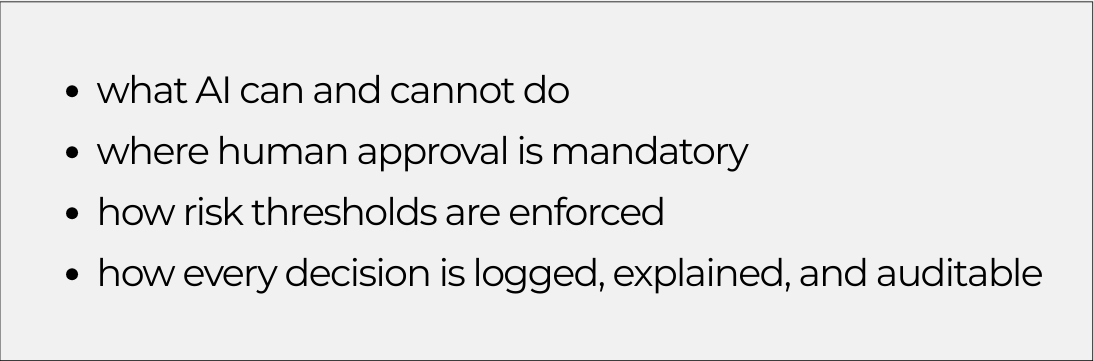
They are not static policies or PDF frameworks.
They are living constraints, shaped by:
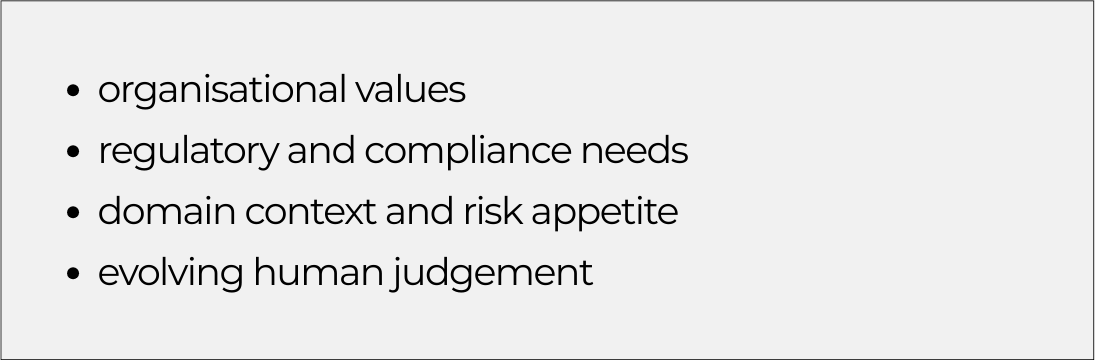
This is how Human-in-the-loop AI governance is enforced by design, not promised in slide decks.
Human-in-the-loop Enforced, Not Promised
At Tntra, “human-in-the-loop” is not a slogan.
It is structurally enforced across our enterprise AI operating model.
Shruti cannot act outside defined guardrails.
She cannot bypass human ownership.
She cannot quietly automate accountability away.
Humans:
- define objectives and constraints
- review and validate outcomes
- own the consequences — good or bad
Shruti accelerates insight and learning, but decision authority never leaves human hands.
This is how trust is built — not declared.
Shruti as the Nervous System
Shruti has become the nervous system of Tntra.
She connects signals across:
- innovation and venture pipelines
- delivery and execution workflows
- people, learning and capability journeys
- platforms, products, and IP
- customer outcomes and feedback loops
Like a nervous system, she senses, connects, learns, and responds — while the organisation retains control over direction and movement.
Guardrails act as reflex boundaries, enabling speed without loss of control.
This is AI governance in enterprises implemented as infrastructure, not oversight theatre.

How this becomes Real: Platforms, not Theory
This is not a thought experiment.
This intelligence model is operationalized through Tntra’s platforms — most visibly through T(u)LIP — in support of our enterprise AI Advisory Services.
Across these platforms:
– ideas, assets, and initiatives move through governed stage-gates
– Shruti applies context-aware intelligence at every step
– guardrails and gates are encoded into workflows, not documents
– learning compounds across teams, programs, and customers
Customers don’t just receive AI outputs.
They work inside the same governed intelligence layer and enterprise-grade AI decision-making frameworks that we use ourselves.
Five years of Design, not a Sudden Announcement
This decision did not start today.
Shruti has evolved alongside Tntra for over five years — shaped by real delivery, real constraints, real learning, and real accountability.
AI-driven learning and intelligence were built into our platforms from the beginning — not bolted on when it became fashionable.
Naming Shruti as CAIO simply makes that reality explicit.
It reflects how we think about AI leadership in enterprises: designed patiently, proven quietly, scaled responsibly.
What this means for Our Customers
Our customers don’t just “use AI.”
They engage with intelligence that is:
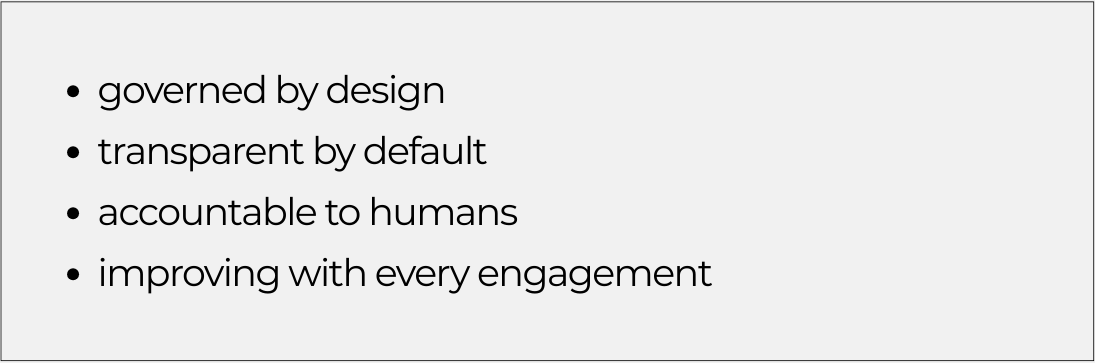
They benefit from faster learning loops, clearer decisions, and AI that works with their teams — not around them.
This is AI built for real organisations, not demos.
This is an enterprise AI strategy turned into daily practice.
A Direct Invitation
If you’re working with Tntra — or considering it — this is the invitation.
Build intelligence as infrastructure.
Not as a feature.
Not as a title.
Not as a promise.
Operate inside governed intelligence — where AI accelerates learning, humans retain authority, and accountability is never automated away.
AI should not fight culture.
It should become part of it.
This is how we practice Enterprise AI leadership.
Welcome to the next chapter.
Design AI governance that scales with your business—not against it.
Let’s shape your enterprise AI strategy together.Start a Conversation and Explore Enterprise AI Advisory Services.