The Evolution of CTO as a Service in the AI-Driven World
CTO as a Service has evolved into a powerful leadership model for modern, AI-driven companies. It offers flexible access to senior technology expertise without the pressure of a full-time hire. From early-stage startups to product-led and AI-first organizations, this approach supports smarter architecture, scalable systems, and clear technology strategy. As AI reshapes how products are built, AI-driven CTO services enable teams to grow with clarity, agility, and confidence. Continue reading to learn more.
Technology leadership used to follow a predictable path. A company grew, engineers were hired, complexity increased, and eventually a full-time CTO stepped in to hold the technical vision together. That path still exists, but it no longer fits the pace, uncertainty, and ambition of today’s startups and digital-first companies.
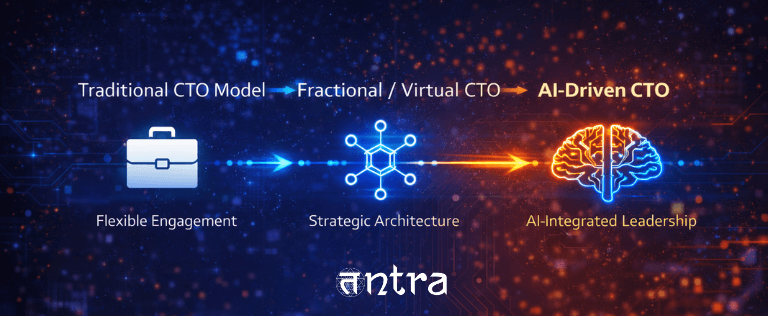
In an AI-driven world, products are launched faster, teams are distributed from day one, and technology decisions carry long-term consequences much earlier in the journey. Founders are expected to think about architecture, data, AI readiness, scalability, and security even before product-market fit feels stable. This shift has quietly transformed how companies access technology leadership — leading to the rise of technology leadership as a service.
That transformation is where CTO as a Service enters the picture.
Rather than being a temporary workaround, CTO as a Service for startups has evolved into a strategic leadership model of its own. It supports founders, product teams, and growing organizations with senior-level guidance while staying flexible enough to adapt to constant change. As AI reshapes how products are built and scaled, this model is becoming one of the most natural ways to lead technology without forcing early, irreversible decisions.
What Is CTO as a Service and How Does It Work?
At its heart, CTO as a Service means gaining access to experienced technology leadership without committing to a full-time executive hire. Instead of bringing someone on payroll permanently, companies work with a seasoned CTO on a flexible basis through on-demand CTO services, aligned to their current stage and goals.
This leadership can be hands-on or advisory, short-term or ongoing. It often starts with understanding the product vision, business model, and technical reality. From there, the CTO partner helps shape architecture, engineering practices, technology choices, long-term strategy, and CTO advisory services support.
For early-stage teams, CTO as a Service for early-stage startups often focuses on laying strong foundations. That includes choosing the right stack, defining MVP architecture, avoiding early technical debt, and ensuring the product can evolve without constant rewrites.
For growing companies, outsourced CTO services tend to shift toward scalability, team structure, performance, security, reliability, and even CTO as a Service for enterprise AI adoption as AI becomes more embedded into products.
In practice, CTO consulting services under the CTO as a Service offerings umbrella blend leadership, strategy, and execution support. It feels less like hiring a consultant and more like adding a trusted technical co-pilot to the journey.
Why CTO as a Service Feels Natural for Modern Startups
Startups today operate under very different conditions than a decade ago. Teams are smaller, timelines are tighter, and expectations are higher.
This reality explains the rise of CTO as a Service for startups and specifically CTO as a Service for AI startups. Founders often need senior guidance long before they can justify a full-time CTO. They need someone who has seen systems scale, teams grow, and products evolve through multiple phases.
Virtual CTO services and fractional CTO services meet this need without forcing premature commitments. They allow founders to access deep experience while keeping flexibility intact — delivering cost-effective CTO leadership for AI-driven businesses.
This model also reduces pressure. Instead of rushing to hire the first available CTO, teams can make thoughtful leadership decisions when timing feels right — especially when evaluating CTO as a Service vs full-time CTO.
CTO as a Service vs Full-Time CTO
The conversation around CTO as a Service vs full-time CTO is less about superiority and more about fit.
A full-time CTO brings long-term ownership and deep internal presence. This works well when the organization is stable, well-funded, and certain about its direction.
CTO as a Service, on the other hand, aligns with moments of change. It supports exploration, iteration, and growth without locking the company into a fixed structure too early.
Many companies discover that starting with fractional CTO services or on-demand CTO services actually leads to stronger long-term outcomes. By the time a full-time CTO is hired, the role is clearer, expectations are aligned, and the foundation is already solid.
For a deeper comparison, read:
- Fractional CTO vs Full-Time CTO: Which Is Right for Your Business?
https://www.tntra.io/blog/fractional-cto-vs-full-time-cto-which-is-right-for-your-business/
Fractional CTO vs Virtual CTO: A Practical Distinction
The difference between fractional CTO vs virtual CTO often comes down to depth of involvement.
A fractional CTO for SaaS and AI platforms becomes part of the team rhythm. They join planning sessions, review technical decisions, mentor engineers, and help guide execution — especially during AI modernization initiatives.
A virtual CTO for AI and digital transformation focuses more on strategic direction. They advise on architecture, technology roadmaps, AI readiness, and major decisions while execution stays primarily with the internal team.
Both models sit comfortably within CTO consulting services, and many engagements blend the two as needs evolve.
How AI Changed the Meaning of Technology Leadership
AI has altered what it means to lead technology. It is no longer only about systems running reliably. It is also about how data flows, how models learn, how decisions are automated, and how governance is handled responsibly.
This shift has driven the emergence of AI-driven CTO services and outsourced CTO for AI roadmap and architecture planning.
For many companies, AI consulting services now sit alongside core engineering leadership. Decisions about AI are intertwined with product strategy, customer experience, and long-term competitiveness.
A CTO today must think about AI not as an add-on, but as part of the product’s DNA — especially for organizations undergoing digital transformation strategy initiatives.

CTO as a Service for AI Startups
AI-first companies face unique challenges from day one.
CTO as a Service for AI startups helps founders navigate this complexity with confidence. Instead of reacting to technical problems as they arise, startups gain proactive leadership that shapes architecture and AI strategy consulting for startups early.
For AI startups, having the right CTO guidance early often determines whether experimentation turns into a sustainable product.
For more insight, read:
- Why CTO as a Service Matters in AI-Driven Businesses
https://www.tntra.io/blog/why-ctoaas-matters/
How CTO as a Service Helps Scale AI Products
Scaling AI products involves more than growing traffic or infrastructure.
How CTO as a Service helps scale AI products becomes clear as systems mature. Leadership ensures models are reliable, pipelines are resilient, and deployment processes support continuous improvement.
This is particularly relevant for CTO as a Service for product-led companies, where AI capabilities must evolve alongside user growth.
When to Hire a Fractional CTO for AI Transformation
AI transformation often begins quietly.
This moment is often when to hire a fractional CTO for AI transformation.
A fractional CTO brings coherence. They align AI initiatives with business priorities, reduce duplication, and bridge leadership conversations — making them essential for structured startup technology advisory and AI scaling.
Virtual CTO for AI and Digital Transformation
A virtual CTO for AI and digital transformation provides strategic oversight during modernization efforts.
They combine architecture guidance, AI system oversight, and product engineering services alignment to ensure long-term value creation.
CTO as a Service for Product-Led Companies
CTO as a Service for product-led companies focuses on building systems that empower teams.
Architecture supports rapid releases. Platforms scale smoothly. Engineering practices prioritize clarity and collaboration — reinforcing strong product engineering services foundations.
Core Benefits of CTO as a Service
The benefits of CTO as a Service include:
- Access to senior technology leadership without full-time commitment
- Flexible engagement aligned to company stage and goals
- Clear technology strategy that supports business outcomes
- Strong guidance for AI adoption and scaling
- Reduced risk of early architectural mistakes
- Support for founders navigating complex technical decisions
- A structured approach to CTO as a Service pricing and cost control
CTO Advisory Services and Strategic Confidence
CTO advisory services offer founders perspective during roadmap planning, investor discussions, and AI investment decisions.
This advisory layer supports long-term thinking while enabling companies to evaluate fractional CTO vs virtual CTO models confidently.
CTO as a Service Pricing and Engagement Models
CTO as a Service pricing reflects flexibility.
Compared to a full-time executive hire, outsourced CTO services provide predictable costs and scalable engagement — ideal for companies assessing CTO as a Service vs full-time CTO.
Is CTO as a Service Suitable for AI-Driven Startups?
The question is CTO as a Service suitable for AI-driven startups? arises frequently.
For companies building AI platforms, launching intelligent products, or exploring AI strategy consulting for startups, the answer is often yes — particularly when they need structured leadership without long-term executive overhead.
What Does a Fractional CTO Do in AI Transformation?
When founders ask what does a fractional CTO do in AI transformation?, the answer includes:
- Aligning AI roadmap with business strategy
- Designing scalable AI architecture
- Overseeing data governance
- Mentoring internal engineering teams
- Supporting CTO as a Service for enterprise AI adoption
Common CTO as a Service Offerings Today
Modern CTO as a Service offerings include:
- Technology and architecture strategy
- AI strategy consulting for startups
- Startup technology advisory
- Engineering leadership and mentoring
- Product engineering services alignment
- AI and digital transformation guidance
For deeper insight into structured models, read:
- Tntra’s CTO as a Service Model Explained
https://www.tntra.io/blog/tntra-cto-as-a-service-model/ - CTO as a Service: How It Works
https://www.tntra.io/blog/cto-as-a-service-how-it-works/
The Future of Technology Leadership as a Service
As AI continues to reshape industries, technology leadership as a service is becoming a permanent leadership model.
Whether through fractional CTO services, virtual CTO services, or structured CTO consulting services, this evolution reflects how modern companies operate.
Closing Thoughts
The evolution of CTO as a Service mirrors the evolution of technology itself.
In an AI-driven world, leadership must be thoughtful, flexible, and aligned with business outcomes. Through AI-driven CTO services, fractional CTO services, and virtual CTO services, organizations gain clarity, scalability, and strategic confidence.
Ready to Shape Your AI and Technology Strategy?
If you’re exploring CTO as a Service for AI startups, scaling AI platforms, or planning long-term digital transformation strategy, Tntra ALS brings CTO-level leadership, AI strategy, and product engineering expertise together.
Let’s build a technology foundation that grows with your ambition. Schedule a Call Today!
FAQs
What is CTO as a Service and how does it work?
CTO as a Service provides experienced technology leadership on a flexible basis through on-demand CTO services or fractional CTO services, helping companies make strategic decisions without hiring a full-time executive.
How is CTO as a Service evolving in the AI era?
It is expanding into AI-driven CTO services, integrating AI architecture planning, data governance, and model lifecycle management into core leadership responsibilities.
What is the difference between a fractional CTO and a virtual CTO?
In the fractional CTO vs virtual CTO comparison, a fractional CTO is embedded in execution and team rhythm, while a virtual CTO focuses primarily on high-level strategy.
When should a company choose CTO as a Service over hiring a full-time CTO?
Companies often choose CTO as a Service vs full-time CTO when they need flexibility, structured growth, and cost-effective CTO leadership for AI-driven businesses without long-term executive overhead.
Is CTO as a Service suitable for AI-driven startups?
Yes. CTO as a Service for AI startups provides early architecture clarity, AI strategy alignment, and scalable leadership.