Real-Time Fraud Prevention Systems: From Rules-Based Engines to AI-Driven Models
A real-time fraud prevention system has transformed from static monitoring into intelligent, adaptive protection that evaluates risk in milliseconds. Powered by real-time fraud detection software, advanced machine learning models, and behavioral analytics, modern institutions now rely on an AI fraud detection platform to secure digital transactions while minimizing friction.
Banks, fintech platforms, and payment providers deploy an enterprise fraud prevention solution that combines predictive modeling, compliance alignment, and seamless orchestration. As digital ecosystems expand, scalable real-time transaction fraud detection becomes essential for resilience, trust, and regulatory confidence.
Why a Real-Time Fraud Prevention System Matters More Than Ever
Digital finance operates in milliseconds. Transactions move instantly across devices, borders, and payment channels. In this environment, organizations cannot rely on delayed reviews. They require a fraud detection system for banks that acts at the exact moment risk appears.
A modern payment fraud prevention software solution evaluates:
- Device intelligence
- Behavioral patterns
- Transaction context
- Identity signals
- Location anomalies
These signals feed into an AI-based fraud detection system capable of real-time transaction fraud detection across cards, wallets, ACH transfers, and embedded finance ecosystems.
The result? Security and speed coexist.
AI vs Rules-Based Fraud Detection: Why Legacy Systems Are Failing
For years, fraud detection relied on rigid logic. Thresholds triggered alerts. Investigators reviewed cases manually. While useful, static systems struggle against evolving threats.
Rules-Based vs AI Fraud Detection: What’s the Difference?
| Rules-Based Detection | AI-Based Fraud Detection |
|---|---|
| Fixed thresholds | Adaptive learning models |
| High false positives | Intelligent contextual scoring |
| Manual updates required | Self-learning systems |
| Reactive | Predictive & proactive |
Many institutions now explore how to migrate from rules-based to AI fraud detection as part of their broader fraud detection modernization strategy.
An advanced machine learning fraud detection solution evaluates behavior patterns instead of isolated rule violations. It identifies subtle anomalies and reduces unnecessary friction.
This shift explains why AI vs rules-based fraud detection is a leading discussion in digital risk transformation.
How AI Improves Fraud Detection Accuracy in Milliseconds
Financial leaders often ask: How does AI detect fraud in milliseconds?
AI models evaluate thousands of data points simultaneously:
- Transaction velocity
- Historical behavior
- Device fingerprinting
- Session activity
- Network intelligence
For a deeper perspective on how predictive intelligence enhances security and customer journeys, explore our detailed guide on AI-powered fraud detection and predictive analytics in fintech.
A real-time fraud scoring model calculates probability-based risk scores dynamically. Instead of binary approval/decline logic, the system adapts responses intelligently.
Benefits of Real-Time Fraud Detection
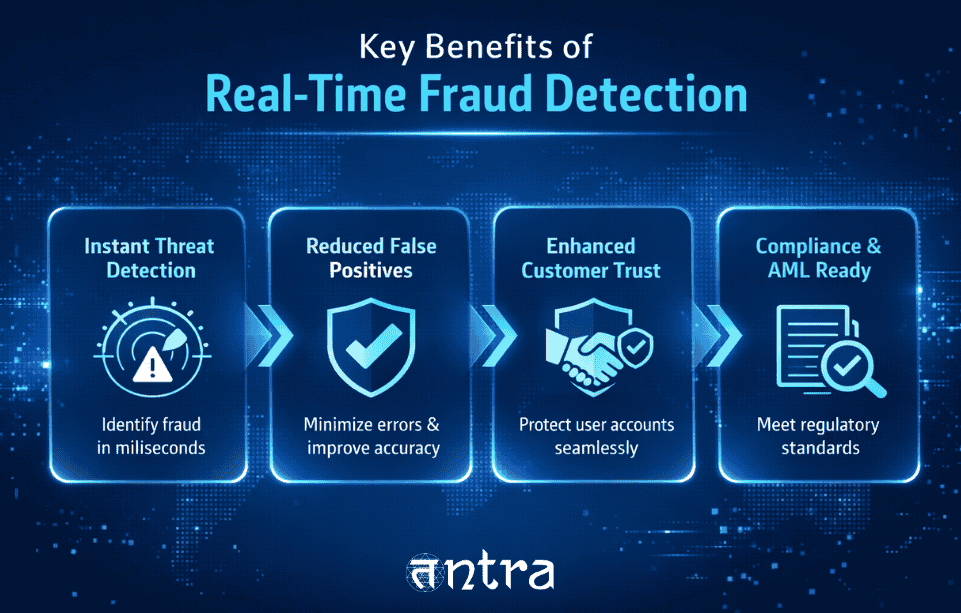
The benefits of real-time fraud detection extend across the organization:
- Immediate threat containment
- Reduced fraud losses
- Improved customer experience
- Faster operational workflows
- Better fraud detection false positive reduction
Institutions investing in reducing false positives in fraud detection using AI report higher approval rates and fewer customer complaints.
Behavioral Biometrics & Adaptive Fraud Intelligence
Modern systems incorporate behavioral biometrics fraud detection to create silent identity signatures. Typing rhythm, scrolling speed, gesture patterns, and session timing contribute to contextual trust evaluation.
This layered intelligence enhances:
- Fraud detection for high-risk transactions
- Account takeover prevention
- Synthetic identity detection
- Insider threat identification
To understand evolving transaction risks and emerging attack vectors, read our analysis of modern transaction fraud patterns fintechs must monitor.
When integrated into a next-generation fraud prevention platform, this approach dramatically improves detection precision.
Inside a Real-Time Fraud Detection Architecture for Fintech
A scalable fraud detection engine architecture combines:
- Streaming data pipelines
- Predictive AI models
- Decision orchestration layers
- Compliance monitoring modules
At the core sits a real-time fraud scoring model supported by seamless fraud detection API integration across mobile apps, banking cores, and payment gateways.
This structure defines modern real-time fraud detection architecture for fintech environments.
Organizations searching for the best real-time fraud detection system for banks prioritize scalability, API flexibility, explainable AI, and compliance readiness.
AML Integration & Fraud Monitoring for Regulatory Compliance
Fraud prevention must align with regulatory standards.
Leading institutions integrate:
- AML and fraud detection integration
- Continuous fraud monitoring for regulatory compliance
- Automated reporting aligned with fraud detection compliance requirements
This alignment ensures audit readiness and supports long-term trust with regulators and partners.
How to Implement Real-Time Fraud Detection in Banking
Institutions exploring how to implement real-time fraud detection in banking should follow a structured upgrade path:
- Audit existing detection models
- Identify gaps in legacy rule engines
- Introduce a hybrid AI layer
- Enable real-time scoring
- Integrate compliance workflows
- Monitor performance & optimize
This structured fraud detection system upgrade ensures minimal disruption while improving accuracy.
Operational Impact of an Enterprise Fraud Prevention Solution
Adopting a scalable enterprise fraud prevention solution produces measurable improvements:
- Reduced chargebacks
- Faster fraud investigations
- Stronger audit trails
- Improved customer approval rates
- Lower operational costs
See how this approach delivers measurable outcomes in our risk mitigation services case study, showcasing real-world fraud reduction and compliance impact.
More importantly, it transforms fraud prevention into a strategic advantage rather than a cost center.
Real-Time Fraud Prevention in the FinTech Ecosystem
Innovation must coexist with protection. Strong fintech practices require fraud intelligence embedded directly into digital architecture.
A forward-looking fintech software development company integrates fraud systems during early design phases. Through modern fintech app development services, authentication and monitoring become seamless.
Comprehensive fintech app development solutions delivered by an experienced fintech application development company ensure every fintech solution balances growth and risk management.
Fraud prevention becomes invisible yet powerful.
The Future: AI-Driven Fraud Prevention & Modernization Strategy
The next evolution of fraud detection includes:
- Graph analytics
- Privacy-preserving AI
- Federated learning
- Collaborative intelligence
AI’s broader role in protecting digital ecosystems is explored further in our article on the role of AI in cybersecurity and digital safety.
Institutions adopting a strong fraud detection modernization strategy position themselves for scalable, adaptive protection.
A modern AI fraud detection platform will increasingly anticipate threats before transactions initiate — redefining prevention as predictive rather than reactive.
Ready to Upgrade Your Fraud Detection System?
If you’re evaluating a real-time fraud prevention system upgrade or exploring how to implement AI-driven fraud intelligence across banking or fintech platforms, Tntra can help.
Our product development services help institutions embed AI-driven fraud intelligence directly into scalable fintech platforms. Through advanced software development services, we design compliant, secure, and high-performance fraud detection architectures.
Our experts design scalable AI fraud detection platforms, integrate compliance-ready architectures, and build adaptive systems that reduce fraud losses while improving customer trust.
Connect with Tntra today and modernize your fraud prevention strategy with confidence.
FAQs
What is a real-time fraud prevention system?
A real-time fraud prevention system analyzes transaction behavior, identity signals, and contextual data within milliseconds to block suspicious activity before completion.
How does AI fraud detection work?
An AI-based fraud detection system uses machine learning models to analyze patterns across massive datasets, applying dynamic scoring to detect anomalies instantly.
Is AI better than rules-based fraud detection?
In the debate of AI vs rules-based fraud detection, AI offers adaptive learning and improved fraud detection false positive reduction, while rules provide structure and compliance clarity. Modern systems blend both.
Why are rules-based fraud systems failing?
They cannot adapt quickly to evolving fraud tactics and often generate high false positives.
How do banks detect fraud instantly?
Banks deploy real-time fraud detection software, API integrations, and intelligent scoring engines connected across payment infrastructure.
What are the types of fraud detection methods?
- Rules-based detection
- Machine learning fraud detection solution
- Behavioral biometrics
- Anomaly detection
- AML-integrated monitoring
What is the biggest challenge in fraud detection?
Balancing risk containment with customer experience while minimizing false positives.
How can false positives be reduced in fraud detection?
By leveraging AI models that continuously learn behavior patterns and optimize scoring thresholds.