Autonomous Supply Chain: How AI is Redefining Global Logistics?
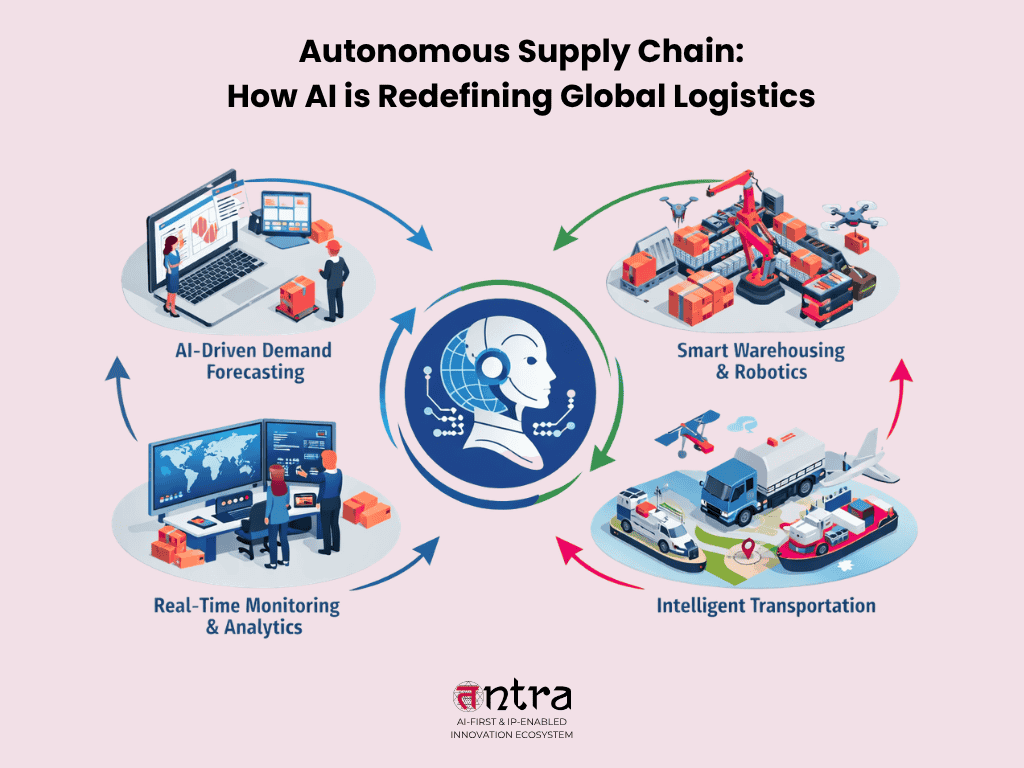
Autonomous supply chains are transforming global logistics through artificial intelligence, predictive analytics, and intelligent automation. An AI powered supply chain helps organizations forecast demand accurately, optimize logistics routes, automate warehouse operations, and improve supply chain efficiency.
This article explores how AI in supply chain management enables smarter decision-making across logistics networks. It highlights key AI supply chain use cases, emerging smart logistics technology trends, and the future of AI in logistics as businesses move toward more intelligent, data-driven operations. Continue reading to learn more.
What is an Autonomous Supply Chain?
An autonomous supply chain is a system powered by AI, predictive analytics, and automation that continuously analyzes data and makes real-time logistics decisions with minimal human intervention.
Global supply chains have always been intricate networks. Raw materials move from one country to another, manufacturing happens somewhere else, warehouses handle thousands of orders daily, and logistics providers coordinate shipments across oceans and highways.
Behind every product that reaches a customer’s hands lies a long chain of decisions, coordination, and timing.
For decades, many of these decisions depended heavily on manual planning, historical reports, and fragmented systems. Teams worked hard to anticipate demand, coordinate transportation, and manage inventory, yet unexpected disruptions could quickly throw everything off balance.
Today, artificial intelligence is transforming how supply chains operate. Businesses across the world are adopting advanced technologies to create smarter, faster, and more responsive logistics networks.
The idea of the autonomous supply chain is rapidly moving from concept to reality.
Through advancements in AI in supply chain management, organizations are gaining the ability to:
- Anticipate demand shifts
- Optimize transportation routes
- Automate warehouses
- Respond to disruptions in real time
An AI powered supply chain functions very differently from traditional logistics systems. Instead of waiting for problems to appear, intelligent systems analyze data continuously and guide decisions across planning, production, warehousing, and distribution.
This evolution in AI in logistics and supply chain operations is helping companies create networks that are more adaptive, resilient, and efficient.
As businesses pursue intelligent supply chain automation, they are discovering new ways how AI improves supply chain efficiency across global operations.
Why Are Global Supply Chains Becoming More Complex in AI-Driven Environments?
Supply chains today are more globalized and interconnected than ever before.
A single product may involve:
- Components sourced from multiple continents
- Manufacturing facilities across regions
- Distribution networks serving customers worldwide
This complexity brings tremendous opportunity, yet it also introduces significant challenges.
Key challenges in supply chain management and solutions include:
- Rapidly shifting demand patterns
- Transportation delays
- Supplier reliability variations
- Ripple effects from small disruptions
Traditional supply chain systems often rely on historical sales data and periodic planning cycles. While these approaches support operations, they struggle to respond quickly to real-time changes.
Modern logistics environments require faster insights and smarter decision-making.
This is where AI in logistics and supply chain becomes essential.
By analyzing vast amounts of operational data, AI systems help organizations:
- Understand patterns
- Anticipate disruptions
- Optimize logistics decisions continuously
This transformation is driving the rapid adoption of machine learning in supply chain management and accelerating the broader digital transformation in logistics industry.
How Are Autonomous Supply Chain Systems Emerging with AI?
The idea of the autonomous supply chain centers around intelligent decision-making powered by data.
Instead of relying solely on human teams, AI powered supply chain systems monitor supply chain activity in real time and recommend actions that improve performance.
These systems analyze information from across the entire logistics ecosystem, including:
- Demand signals
- Supplier performance metrics
- Transportation data
- Weather conditions
- Market indicators
Over time, these models become increasingly accurate. They learn from operational outcomes and refine their predictions continuously.
As a result, supply chains become more adaptive and responsive.
Understanding how AI enables autonomous supply chains in global logistics begins with recognizing how data-driven insights support faster and more informed decisions.
Artificial intelligence helps logistics teams:
- Identify emerging trends
- Optimize resource allocation
- Coordinate operations globally
Human expertise still plays a critical role, especially in strategic decisions. However, AI enhances these capabilities by automating complex operational processes.
How Does AI Driven Demand Forecasting Enable Smarter Supply Chain Decisions?
Demand forecasting plays a central role in supply chain planning.
Accurate predictions help companies:
- Determine production schedules
- Manage inventory levels
- Coordinate logistics resources effectively
Traditional forecasting models rely heavily on historical data. However, AI driven demand forecasting in supply chain expands this approach significantly.
Organizations now analyze:
- Consumer behavior patterns
- Economic indicators
- Promotional activities
- Weather trends
- Market signals
These models continuously update as new data becomes available.
This clearly demonstrates how predictive AI improves supply chain forecasting accuracy, enabling:
- More stable inventory levels
- Smoother production cycles
- Better coordination across partners
Predictive insights also help organizations anticipate sudden demand shifts. When trends change, AI systems identify early signals and adjust forecasts accordingly.
How Does Predictive Analytics Improve Supply Chain Decision Making?
Another powerful capability within modern logistics systems is predictive analytics in supply chain operations. Predictive models analyze historical and real-time data to anticipate potential outcomes across logistics networks.
Supply chain leaders use predictive analytics to:
- Identify risks early
- Optimize planning decisions
- Improve operational efficiency
Key applications include:
- Supplier reliability analysis and performance tracking
- Shipment delay prediction and route risk evaluation
- Inventory planning based on projected demand
- Maintenance scheduling for logistics infrastructure
These insights enable organizations to maintain stability even in highly dynamic environments.
They also strengthen AI logistics optimization solutions, allowing businesses to proactively manage disruptions instead of reacting to them.
How Do AI Logistics Optimization Solutions Improve Transportation Efficiency?
Transportation is one of the most complex components of global logistics.
Shipments move across:
- Road networks
- Railways
- Cargo ships
- Air transport
Coordinating these movements efficiently requires constant planning.
This is where AI logistics optimization solutions play a crucial role.
These systems analyze:
- Traffic patterns
- Weather conditions
- Fuel costs
- Delivery deadlines
- Vehicle capacity
When unexpected disruptions occur, AI systems dynamically recompute optimal routes.
This showcases how AI in logistics and supply chain systems:
- Improve delivery reliability
- Reduce operational costs
- Enhance efficiency
How is AI Transforming Warehouse Automation and Smart Logistics Operations?
Warehouses serve as critical hubs within supply chain operations. Products arrive from suppliers, move through storage and sorting processes, and eventually leave for distribution centers or final delivery.
Artificial intelligence is transforming warehouse operations through AI for warehouse automation technologies.
Modern warehouses now integrate:
- Robotics for material handling
- Computer vision for sorting and tracking
- Machine learning for inventory optimization
AI systems analyze inventory movement patterns and recommend optimal storage arrangements.
For example:
- High-demand products are positioned closer to dispatch areas
- Slow-moving inventory is stored strategically to optimize space
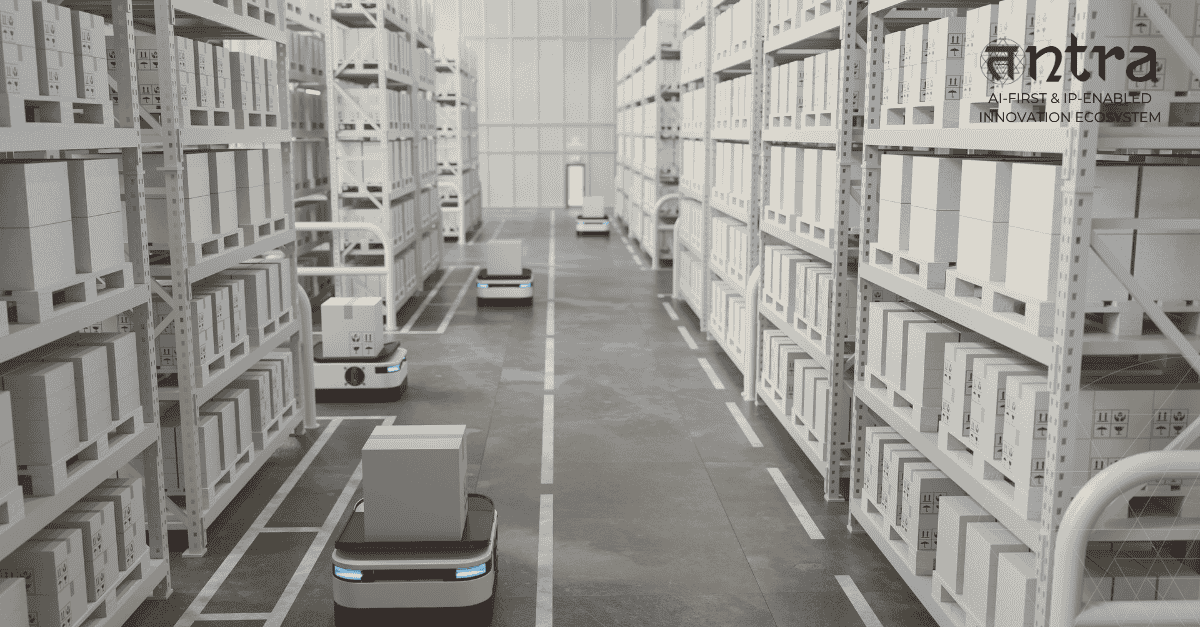
Many distribution centers deploy autonomous mobile robots that transport goods across warehouse floors. These systems work alongside human teams, improving speed and accuracy.
These advancements reflect evolving smart logistics technology trends that are reshaping warehouse efficiency and operational performance.
What Are the Top AI Use Cases for Autonomous Logistics and Smart Warehouses?
Across industries, organizations are rapidly adopting AI supply chain use cases to enhance logistics performance.
Artificial intelligence is enabling smarter, more responsive ecosystems through multiple applications.
Key AI use cases for autonomous logistics and smart warehouses include:
- Intelligent inventory systems that monitor stock levels and trigger automated replenishment
- Smart order fulfillment systems that optimize picking routes within warehouses
- AI powered supply chain transportation planning for faster deliveries
- Real-time risk monitoring tools that detect disruptions across logistics networks
These use cases demonstrate how AI is moving logistics toward fully autonomous operations.
How Does Intelligent Supply Chain Automation Improve End-to-End Operations?
The concept of intelligent supply chain automation involves integrating AI across multiple operational layers.
Instead of isolated automation, organizations are building interconnected systems that unify:
- Planning
- Production
- Warehousing
- Distribution
AI platforms continuously analyze data and trigger automated responses.
For example:
- When demand forecasts increase, production schedules adjust automatically
- Logistics routes are recalculated instantly
- Inventory allocation updates in real time
This is how companies are learning how companies implement autonomous supply chain systems at scale.
To enable this transformation, businesses are investing in:
These capabilities allow organizations to operate with greater agility and precision.
What Smart Logistics Technology Trends Are Driving Innovation?
Several emerging innovations are shaping the future of logistics.
These smart logistics technology trends highlight how rapidly the industry is evolving toward intelligence and automation.
Key technologies include:
- AI-powered digital twins that simulate supply chain scenarios
- Autonomous delivery vehicles and drone-based logistics
- IoT sensors that track shipments in real time
- Blockchain solutions that enhance transparency and trust
Together, these technologies accelerate the digital transformation in logistics industry, connecting systems, data, and stakeholders across global supply networks.
What are the Benefits of AI Powered Supply Chain Automation for Enterprises?
Organizations adopting AI-driven logistics systems experience significant improvements.
The benefits of AI powered supply chain automation for enterprises extend across operations, cost efficiency, and customer experience.
Key benefits include:
- Faster logistics operations and reduced delivery delays
- More accurate forecasting through AI driven demand forecasting in supply chain
- Lower transportation costs using AI logistics optimization solutions
- Greater visibility across global supply networks
- Improved customer satisfaction through consistent product availability
These improvements clearly demonstrate how AI improves supply chain efficiency in modern logistics environments.
Machine Learning in Supply Chain Management
At the core of these innovations is machine learning in supply chain management.
Machine learning algorithms analyze large datasets to identify patterns and insights that guide logistics decisions.
These models:
- Learn from past operations
- Continuously improve predictions
- Adapt to new data inputs
Applications include:
- Demand forecasting
- Supplier risk analysis
- Route optimization
- Inventory management
As data volumes grow, machine learning becomes even more powerful in driving supply chain intelligence.
What is the Future of AI in Logistics and Autonomous Supply Chains?
The future of AI in logistics promises even greater levels of automation and intelligence.
Supply chains are moving toward becoming fully autonomous systems that can:
- Self-optimize operations
- Predict disruptions with high accuracy
- Respond instantly to changes
Advanced analytics platforms will provide deeper visibility across logistics networks.
Autonomous vehicles, robotics, and AI systems will handle increasing portions of transportation and warehouse operations.
Understanding how AI enables autonomous supply chains in global logistics will be critical for organizations aiming to stay competitive.
How is AI Redefining the Future of Global Supply Chains?
Global supply chains are undergoing a profound transformation driven by artificial intelligence.
The rise of the autonomous supply chain powered by AI powered supply chain technologies is redefining how businesses operate.
Organizations can now:
- Anticipate demand shifts
- Optimize logistics networks
- Automate warehouse operations
- Respond to disruptions in real time
Advancements in:
- AI driven demand forecasting in supply chain
- predictive analytics in supply chain
- AI logistics optimization solutions
are pushing the industry toward more intelligent and resilient systems.
As AI in supply chain management continues to evolve, businesses that adopt these innovations will lead the future of global logistics.
If you are looking to build an autonomous supply chain powered by AI, our experts can help you design, implement, and scale intelligent logistics systems tailored to your business needs.
Start your transformation here: https://www.tntra.io/supply-chain-software-development
FAQs
What is an autonomous supply chain?
An autonomous supply chain uses AI, predictive analytics, and automation to continuously analyze data and make real-time logistics decisions with minimal human intervention.
How does AI improve supply chain management?
AI in supply chain management improves forecasting, routing, inventory planning, and supplier coordination, enabling faster and more accurate decision-making.
Can AI automate supply chain operations?
Yes, intelligent supply chain automation enables automated decision-making across logistics, warehousing, and inventory management.
What are examples of AI in supply chain management?
Common AI supply chain use cases include:
- Demand forecasting
- Warehouse automation
- Route optimization
- Predictive analytics for logistics
How does predictive analytics improve supply chain performance?
Predictive analytics in supply chain helps anticipate risks, forecast demand, and optimize planning, improving efficiency and reducing disruptions.
What technologies enable smart supply chains?
Technologies include AI, machine learning, IoT, robotics, blockchain, and cloud platforms driving digital transformation in logistics industry.