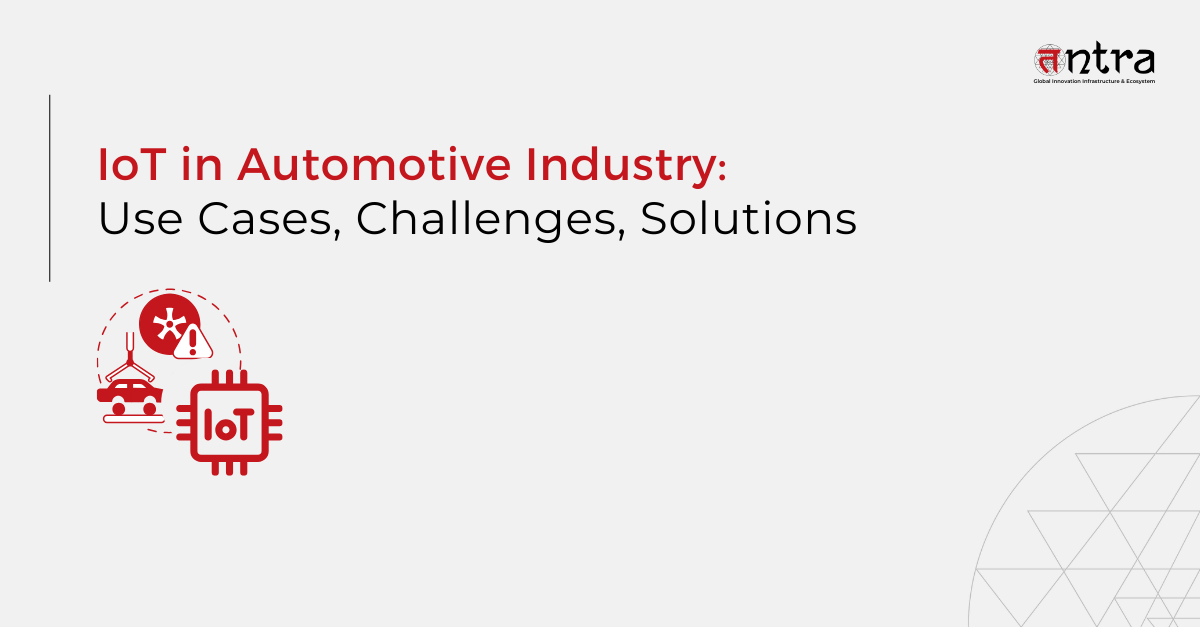
IoT in Automotive Industry: Use Cases, Connected Vehicles, Challenges & Future Trends (2026)
The Internet of Things (IoT) in the automotive industry is transforming how vehicles operate, communicate, and deliver value. Modern vehicles are no longer just mechanical machines—they are evolving into connected, software-driven mobility platforms powered by sensors, cloud platforms, telematics systems, and real-time data analytics.
Through connected vehicle technology, predictive maintenance systems, vehicle telematics platforms, and AI-driven mobility services, automotive companies are improving safety, performance, and driver experience.
This transformation is accelerating with the growth of electric vehicles (EVs), smart city infrastructure, advanced driver assistance systems (ADAS), and software-defined vehicles (SDVs).
Connected vehicles now leverage Vehicle-to-Everything (V2X) communication, cloud-connected platforms, and automotive IoT solutions to improve traffic efficiency, reduce accidents, and deliver intelligent driving experiences.
Real-World Examples of Automotive IoT in Action
Several global companies are already implementing automotive IoT technologies and connected mobility platforms.
Waymo introduced the first self-driving taxi service without a backup driver in the front seat. The Waymo One service launched in Phoenix in 2020, later expanding to San Francisco.
Passengers can control music, adjust temperature, and enjoy a fully automated ride powered by AI algorithms, LiDAR sensors, cameras, radar systems, and real-time data processing platforms.
Tesla’s Autopilot system uses a camera-based perception system and AI models to enable autonomous navigation, automatic lane changes, and self-steering.
Ford’s BlueCruise system provides hands-free highway driving using ADAS technologies such as adaptive cruise control, lane centering, and driver monitoring systems.
Meanwhile, Caterpillar’s MineStar platform uses IoT sensors, predictive analytics, and telematics dashboards to monitor mining equipment, improve worker safety, and optimize industrial operations.
These real-world implementations demonstrate how IoT in connected vehicles and industrial mobility ecosystems is transforming transportation across industries.
The Role of Next-Gen Connectivity
One of the biggest drivers of automotive IoT innovation is the rapid rollout of 5G connectivity.
5G networks enable faster data transmission, lower latency, and more reliable communication between vehicles and cloud platforms.
This enables advanced capabilities such as:
- Vehicle-to-Vehicle (V2V) communication
- Vehicle-to-Infrastructure (V2I) communication
- Vehicle-to-Cloud (V2C) connectivity
- Connected fleet management platforms
With 5G connectivity, automotive IoT systems can support:
- Real-time vehicle diagnostics
- Remote vehicle monitoring
- Predictive maintenance alerts
- Over-the-air (OTA) software updates
- Smart navigation and traffic optimization
Edge computing is also becoming an important component of automotive IoT systems, allowing vehicles to process sensor data locally for faster decision-making in safety-critical scenarios.
IoT in Automotive Industry: An Upward Trend
The adoption of connected vehicle technology and automotive IoT platforms is accelerating worldwide.
According to industry reports, there were more than 16 billion connected IoT devices globally, with automotive IoT representing one of the fastest-growing segments.
The global automotive IoT market is projected to reach over USD 322 billion by 2028, growing at a CAGR of nearly 20%.
This growth is driven by:
- Rising demand for connected vehicles and digital mobility services
- Rapid expansion of electric vehicles and EV charging infrastructure
- Increasing adoption of AI-powered telematics and vehicle analytics platforms
- Government initiatives promoting smart mobility and road safety technologies
Countries such as Germany remain leaders in connected car technology and automotive innovation, supported by strong automotive manufacturing ecosystems.
How IoT is Transforming Automotive Industry
The increasing significance of IoT in the automotive industry is reflected in the rapid evolution of connected mobility technologies and digital vehicle ecosystems.
Automotive manufacturers are shifting from traditional hardware-focused vehicle design to software-defined vehicle architectures that rely heavily on connected data platforms, AI algorithms, and cloud infrastructure.
Because of the growing popularity of electric vehicles, connected infotainment systems, smart mobility infrastructure, and government initiatives aimed at improving road safety, the automotive Internet of Things is expected to expand significantly.
IoT enables vehicles to communicate with other vehicles, traffic systems, cloud platforms, and smart city infrastructure—creating an intelligent mobility ecosystem that improves safety, efficiency, and driver experience.
IoT Use Cases in Automotive Industry
1) Data Analytics for Vehicle Performance
Automotive companies use IoT-driven data analytics platforms to collect and analyze large volumes of data generated by connected vehicles.
This data helps manufacturers understand:
- Driver behavior
- Vehicle performance
- Fuel consumption
- Battery health in EVs
- Component wear and tear
Advanced analytics powered by AI and machine learning enables predictive maintenance, personalized driver services, and improved vehicle performance optimization.
2) Automation and Advanced Driver Assistance
IoT technologies enable automation of various driving tasks, including adaptive cruise control, automated parking, and lane-keeping assistance.
These capabilities are powered by sensor fusion systems that combine LiDAR, radar, cameras, and artificial intelligence algorithms to process real-time data accurately.
Automation driven by IoT represents an important step toward fully autonomous vehicles and intelligent transportation systems.
3) Intelligent Vehicle Control Systems
Vehicle controllers process real-time sensor data to manage key driving functions such as steering, braking, and acceleration.
Modern automotive architectures increasingly rely on centralized computing platforms and zonal electronic architectures that simplify vehicle software management and improve system responsiveness.
4) Connected Vehicle Ecosystems
IoT enables vehicles to connect seamlessly with smartphones, smart city infrastructure, and cloud platforms.
Connected vehicle ecosystems allow cars to interact with traffic management systems, parking infrastructure, EV charging networks, and mobility platforms.
This connectivity enhances overall driving experiences and improves urban mobility.
5) Autonomous and Self-Driving Vehicles
Autonomous vehicles rely heavily on IoT sensors, real-time data processing, AI algorithms, and cloud-based mapping platforms.
These systems enable vehicles to detect obstacles, analyze surroundings, and make driving decisions autonomously.
6) Computer Vision in Smart Vehicles
Computer vision plays a vital role in modern automotive safety systems.
By processing data from cameras and sensors, computer vision systems enable vehicles to identify:
- Pedestrians
- Traffic signs
- Other vehicles
- Road hazards
When combined with AI models and edge computing, computer vision enables faster decision-making in autonomous driving systems.
7) Smart Fleet Management
IoT technology has revolutionized fleet management and logistics operations.
IoT-enabled fleet platforms provide capabilities such as:
- Real-time vehicle tracking
- Fuel consumption monitoring
- Driver behavior analytics
- Predictive maintenance alerts
Companies like DHL already use IoT sensors and telematics platforms to optimize logistics operations and route efficiency.
8) Usage-Based Insurance (UBI)
IoT sensors can monitor driver behavior, including speed, braking patterns, and acceleration.
Insurance companies use this data to offer usage-based insurance models where premiums are calculated based on actual driving behavior.
This encourages safer driving and allows customers to pay insurance rates that reflect their driving habits.
9) Over-the-Air (OTA) Software Updates
One of the most innovative automotive IoT applications is over-the-air software updates.
Manufacturers can deliver new software features, security patches, and system improvements directly to vehicles via cloud connectivity.
OTA updates are a foundational capability of software-defined vehicles, enabling automakers to continuously improve vehicle functionality even after purchase.
Connected Vehicles and V2X Communication
Automotive IoT enables vehicles to communicate with their environment through Vehicle-to-Everything (V2X) communication systems.
- Vehicle-to-Vehicle (V2V): Cars can share real-time data about their speed, position, and direction with neighboring vehicles. This helps drivers avoid potential accidents and allows emergency vehicles to move through traffic more efficiently.
- Vehicle-to-Pedestrian (V2P): Cars can communicate directly with pedestrians or cyclists nearby, alerting both parties to possible hazards and preventing collisions before they happen.
- Vehicle-to-Infrastructure (V2I): Vehicles connect with roadway infrastructure—such as traffic lights, cameras, road signs, and parking meters—using networked technologies. This communication can be used to dynamically adjust traffic signals, relay road conditions or accident alerts to drivers, and even guide vehicles to available parking spaces.
- Vehicle-to-Everything (V2E): This encompasses all the above, allowing cars to interact with anything that might affect the driving experience, including other vehicles, infrastructure, pedestrians, and cloud-based networks.
These communication frameworks enable collision avoidance systems, smart traffic management, and intelligent urban mobility networks.
Communication Protocols Used in Automotive IoT
A variety of communication protocols power the connectivity at the heart of IoT-enabled vehicles:
- Cellular Networks: Modern connected cars primarily rely on cellular networks such as LTE, 4G, and 5G for real-time access to internet-based services, navigation, traffic updates, and remote diagnostics.
- Wi-Fi: Wi-Fi allows vehicles to transfer large amounts of data and can provide high-speed connectivity when paired with infrastructure or personal hotspots.
- Dedicated Short-Range Communications (DSRC): This wireless protocol is used for direct, low-latency communication between vehicles and nearby infrastructure. DSRC enhances vehicle-to-vehicle (V2V) and vehicle-to-infrastructure (V2I) interactions, playing a crucial role in safety features like collision avoidance and traffic signal coordination.
- Bluetooth: For short-range communication inside the vehicle, Bluetooth connects smartphones, wearables, and other personal devices to the car’s infotainment and telematics systems—essential for hands-free calls, app integration, and personalized settings.
Modern automotive IoT platforms also use messaging protocols such as MQTT and REST APIs to enable secure communication between vehicles, cloud platforms, and mobility applications.
Ensuring Vehicle System Reliability and Safety
Automotive IoT platforms rely on both software supervisors and hardware monitoring systems to maintain reliability.
Software supervisors monitor software modules and detect anomalies.
Hardware supervisors monitor sensors and control systems.
Safety frameworks such as ISO 26262 and ISO/SAE 21434 automotive cybersecurity standards help ensure the security and reliability of connected vehicle systems.
What Does a System Supervisor do in Automotive IoT Systems?
In the complex ecosystem of modern connected vehicles, a system supervisor plays a pivotal role in ensuring everything runs smoothly under the hood—both literally and figuratively. Imagine the system supervisor as the automobile’s diligent “air traffic controller,” constantly monitoring both the software and hardware elements in real time.
- Software Oversight: It actively checks that different software modules are operating correctly, comparing outputs to spot any discrepancies. If something looks out of place, like an unexpected reading or a communication glitch, the supervisor can quickly flag the issue, helping to maintain safety and reliability.
- Hardware Monitoring: On the hardware side, the supervisor keeps tabs on crucial components such as sensors and control units. Should a sensor malfunction or a piece of hardware show signs of failure, the system supervisor immediately notifies the driver—similar to how your dashboard lights up when tire pressure is low or the engine needs attention.
By seamlessly overseeing these interconnected systems, the system supervisor acts as an early warning and quality assurance mechanism, enhancing not only vehicle performance but also driver safety and peace of mind.
Challenges of IoT in Automotive Industry
Despite its advantages, automotive IoT adoption presents several challenges.
Major challenges include:
- Cybersecurity threats targeting connected vehicles
- Data privacy concerns related to vehicle data collection
- High implementation costs
- Complex integration across different manufacturers and suppliers
- Connectivity reliability issues
Automotive companies must implement robust cybersecurity frameworks and compliance standards to secure connected vehicle ecosystems.
Addressing Connectivity Issues in Automotive IoT
Reliable connectivity is critical for automotive IoT systems.
A temporary network disruption can affect navigation, safety systems, and remote diagnostics.
To address this challenge, automakers are adopting:
- 5G connectivity
- Multi-network connectivity platforms
- Satellite communication systems
- Edge computing architectures
These technologies ensure vehicles remain connected across urban areas, highways, and remote regions.
Future Trends in Automotive IoT
The future of automotive IoT will be shaped by several emerging technologies.
- Software-Defined Vehicles (SDV)
Vehicles will increasingly rely on software platforms that allow manufacturers to continuously upgrade functionality through OTA updates. - AI-Powered Autonomous Driving
Artificial intelligence will improve perception, navigation, and decision-making in autonomous vehicles. - Edge Computing in Vehicles
Edge computing will enable vehicles to process sensor data locally for faster response times. - Digital Twins for Automotive Simulation
Digital twin technology will allow manufacturers to simulate vehicle performance and predict failures before they occur. - Smart Mobility Ecosystems
Connected vehicles will integrate with smart city infrastructure, EV charging networks, and intelligent traffic management systems.
Common Problems that IoT Solves in the Automotive Industry
In the automotive industry, IoT (Internet of Things) is transforming how vehicles are monitored, maintained, and operated. One of the most impactful solutions is predictive maintenance in connected vehicles, which goes far beyond traditional inspections.
With IoT-enabled systems, vehicles can identify potential issues remotely before they become critical failures. By integrating IoT sensors into key components—such as the engine, brakes, and transmission—automotive systems can continuously monitor vital parameters like engine temperature, fuel consumption, and overall vehicle health.
This real-time data is transmitted to a cloud-based analytics platform, where predictive analytics in automotive IoT helps forecast when specific components may require maintenance, repair, or replacement.
How IoT Predictive Maintenance Reduces Downtime & Costs
For both personal vehicles and commercial fleets, this real-time visibility enables:
- Early detection of mechanical issues before breakdowns
- Reduced vehicle downtime and maintenance costs
- Improved fleet management efficiency using IoT
- Extended vehicle lifespan through proactive servicing
Fleet managers and drivers receive real-time alerts and pre-failure notifications, allowing them to act before issues escalate into safety risks or expensive repairs.
This data-driven maintenance approach is shifting the industry from reactive servicing to proactive vehicle management, making vehicles safer, more efficient, and highly reliable.
Final Thoughts
The automotive industry is rapidly evolving toward connected, intelligent, and software-defined vehicles.
By combining IoT technologies, 5G connectivity, AI analytics, cloud platforms, and edge computing, automotive companies are building the next generation of connected mobility systems.
Despite challenges related to cybersecurity and infrastructure, automotive IoT will play a central role in shaping the future of transportation.
Organizations that invest in connected vehicle platforms, telematics systems, and automotive IoT architectures today will lead the next era of smart mobility and intelligent transportation systems.
At Tntra, we help enterprises build scalable connected vehicle platforms, automotive IoT solutions, telematics systems, and AI-powered mobility applications through our software product engineering expertise.

Learn more about:Software Product Engineering: https://www.tntra.io/engineering
AI Platforms: https://www.tntra.io/shruti-ai
Digital Economy Platforms: https://www.tntra.io/new-economy