AI-Powered Healthcare App Development Services for Modern Healthcare Enterprises
Healthcare digital transformation is no longer a future initiative — it has become a core operational requirement for modern healthcare organizations. This article examines how advanced healthcare app development services, powered by AI-powered healthcare solutions and grounded in real clinical understanding, are helping providers shift from reactive treatment models to proactive, connected care delivery.
From remote patient monitoring app development and telemedicine app development services to HIPAA-compliant healthcare app development and enterprise-scale healthcare platforms, this guide explores what meaningful healthcare technology investment actually requires, what it costs, and what separates scalable, outcome-driven solutions from applications that fail to deliver long-term clinical value.
Why Healthcare App Development Services are defining the Future of Care?
The healthcare industry is undergoing one of the most significant operational shifts in its history. Rising patient expectations, clinician burnout, increasing administrative complexity, and the demand for connected care are forcing healthcare organizations to rethink how care is delivered, managed, and scaled.
Modern healthcare mobile app development is no longer limited to basic patient portals or appointment scheduling tools. Today’s intelligent healthcare systems are designed to support continuous care delivery, real-time clinical decision-making, predictive patient monitoring, secure communication, and data-driven healthcare operations.
As a result, digital healthcare transformation is rapidly becoming the foundation for better patient outcomes, improved operational efficiency, stronger compliance management, and long-term organizational growth.
This article explores how custom healthcare software development services are transforming healthcare delivery, the role of AI in modern healthcare applications, the critical features healthcare organizations should prioritize, and how to approach healthcare technology investment strategically in 2026 and beyond.
The Current State of Healthcare Digital Transformation
Healthcare has historically adopted technology more cautiously than most industries, and for understandable reasons. Poorly designed systems in healthcare create risks that directly affect patient outcomes.
But the market has fundamentally shifted.
Today, healthcare digital transformation is no longer optional infrastructure modernization. It has become a baseline requirement for organizations trying to improve patient outcomes, reduce operational costs, and retain clinicians.
The health systems leading the market are investing heavily in:
- Intelligent healthcare systems
- Healthcare technology solutions
- AI healthcare software solutions
- Remote patient monitoring app development
- Telemedicine app development services
- Healthcare SaaS application development
Organizations delaying modernization are increasingly struggling with patient retention, administrative inefficiency, and clinician burnout.
Modern enterprise healthcare app development enables proactive care models where continuous patient data flows through connected systems capable of identifying risk patterns before conditions escalate.
This is where advanced healthcare digital solutions create measurable impact.
What Do Healthcare App Development Services Include?
Many healthcare organizations underestimate the true scope of modern custom healthcare app development.
Today’s healthcare application development company engagements typically include:
Patient-Facing Healthcare Applications
These applications support:
- Appointment scheduling
- Medication adherence
- Symptom tracking
- Patient engagement
- Care coordination
- Secure provider communication
Modern patient engagement app development focuses heavily on usability, accessibility, and behavioral engagement.
Provider-Facing Clinical Applications
Healthcare providers increasingly require tools that reduce operational burden while improving clinical decision-making.
Modern provider platforms include:
- Clinical workflow automation
- Remote monitoring dashboards
- Documentation support
- AI-assisted decision systems
- Real-time patient alerts
This is where intelligent healthcare solutions begin delivering meaningful operational value.
Enterprise Healthcare Platform Infrastructure
At the enterprise level, healthcare platform development services include:
- EHR integration
- Cloud architecture
- Data interoperability
- Analytics infrastructure
- Security frameworks
- Compliance management
Large-scale enterprise healthcare software development company projects often involve replacing fragmented systems with unified healthcare ecosystems.
How AI-Powered Healthcare Solutions are Transforming Modern Care?
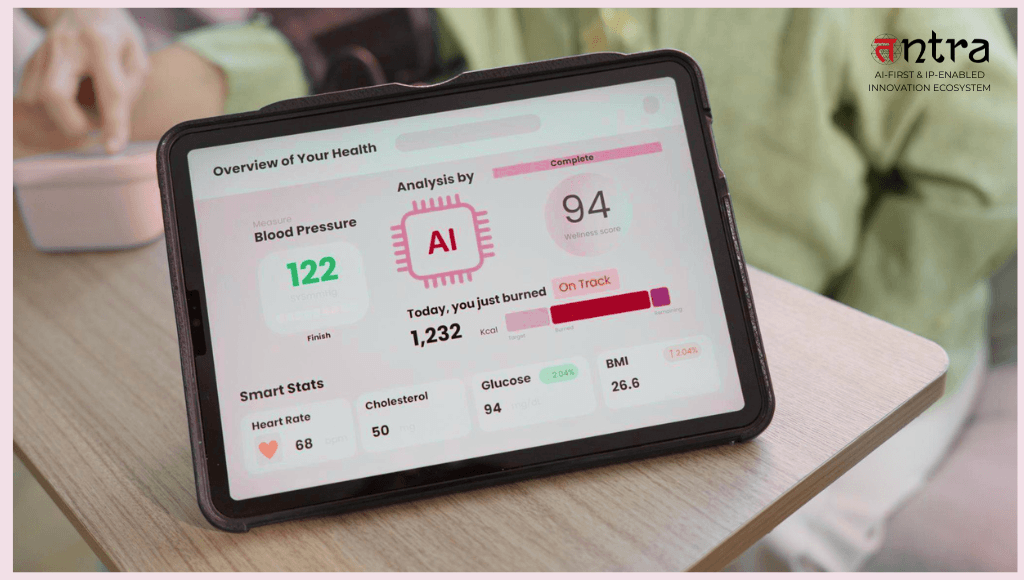
How is AI Transforming Healthcare Mobile Applications?
AI is fundamentally changing what healthcare applications can do.
Traditional systems stored information.
Modern AI healthcare software solutions interpret information, identify patterns, and generate actionable intelligence in real time.
Examples include:
- Predictive patient risk scoring
- Automated clinical documentation
- AI-assisted diagnostics
- Personalized patient engagement
- Intelligent symptom analysis
- Readmission prediction systems
These capabilities are accelerating digital healthcare transformation across hospitals, clinics, and HealthTech organizations.
AI in Remote Patient Monitoring
Remote patient monitoring app development has become one of the fastest-growing categories in healthcare technology.
AI-powered monitoring systems can:
- Detect abnormal patient behavior
- Monitor chronic conditions continuously
- Predict deterioration before symptoms escalate
- Reduce readmissions
- Improve medication adherence
This transition from reactive care to proactive care is one of the most important outcomes of modern healthcare digital transformation services.
AI-Powered Patient Engagement
Modern AI-powered healthcare mobile app development services enable applications that personalize care journeys based on actual patient behavior rather than static protocols.
This includes:
- Personalized reminders
- Adaptive health coaching
- Behavioral engagement tracking
- Dynamic care recommendations
- Automated patient outreach
These capabilities dramatically improve long-term patient engagement outcomes.
Essential Features of High-Performing Healthcare Applications
What Features Should a Healthcare Mobile App Include?
The answer depends heavily on clinical context, patient population, and care delivery model.
However, successful healthcare mobile app development for digital transformation consistently includes the following foundational capabilities.
Deep EHR Integration
Healthcare applications must integrate seamlessly with electronic health records to eliminate fragmented data and manual duplication.
Strong healthcare technology solutions rely on real-time interoperability.
Real-Time Clinical Alerts
Applications should surface actionable clinical information without overwhelming care teams with excessive notifications.
Well-designed alerting systems improve response times and reduce alert fatigue.
HIPAA-Compliant Secure Messaging
Modern HIPAA-compliant healthcare app development services must support secure asynchronous communication between patients and providers while protecting sensitive patient data.
Accessibility and Inclusive Design
Applications must support patients with:
- Visual impairments
- Hearing limitations
- Cognitive challenges
- Motor accessibility needs
Strong accessibility architecture improves both usability and adoption.
Offline Functionality
Many clinical environments still experience inconsistent connectivity.
Robust offline support remains critical for enterprise-grade custom healthcare app development solutions.
Why HIPAA-Compliant Healthcare App Development Matters?
Compliance Must Be Built Into the Architecture
HIPAA-compliant healthcare app development is not a final-stage checklist item.
It must be integrated into the entire software architecture from the beginning.
This includes:
- End-to-end encryption
- Role-based access controls
- Audit logging
- Secure APIs
- Data governance frameworks
- Business associate agreements
- Continuous security monitoring
Strong patient data protection directly affects both regulatory compliance and patient trust.
Healthcare organizations treating compliance as an afterthought often face severe financial and reputational consequences later.
How Healthcare SaaS Application Development is Reshaping the Industry?
The rise of Healthcare SaaS application development has significantly changed healthcare technology accessibility.
Smaller healthcare organizations can now access sophisticated enterprise capabilities through scalable cloud-based platforms.
Modern scalable healthcare application development services allow organizations to:
- Expand rapidly
- Reduce infrastructure costs
- Improve deployment speed
- Support multi-location operations
- Scale patient engagement efficiently
This SaaS-driven model is accelerating broader healthcare digital transformation solutions provider adoption across the healthcare ecosystem.
Why Healthcare Organizations Need Digital Transformation Now?
Why do Healthcare Providers need Digital Healthcare Transformation?
Several major forces are accelerating healthcare modernization simultaneously.
Rising Patient Expectations
Patients now expect healthcare experiences comparable to modern consumer technology platforms.
Healthcare organizations unable to deliver seamless digital experiences increasingly lose patient loyalty.
Clinician Burnout
Administrative burden remains one of the largest contributors to physician burnout.
Modern healthcare digital transformation services help reduce:
- Documentation overload
- Manual administrative tasks
- Workflow inefficiencies
- Communication fragmentation
Value-Based Care Models
Healthcare organizations operating under value-based contracts require:
- Population health visibility
- Predictive analytics
- Continuous patient monitoring
- Proactive intervention systems
Without modern healthcare digital solutions, these models become difficult to sustain operationally.
Healthcare App Development Cost in 2026
How Much Does Healthcare App Development Cost in 2026?
Healthcare app development investment varies based on:
- Application complexity
- AI capabilities
- Integration requirements
- Compliance infrastructure
- Platform scalability
Estimated Investment Ranges
| Project Type | Estimated Cost |
|---|---|
| Focused healthcare application | $75,000 – $250,000 |
| Mid-scale healthcare platform | $250,000 – $750,000 |
| Enterprise intelligent healthcare platform development | $750,000+ |
The strongest ROI typically comes from measurable operational improvements such as:
- Reduced readmissions
- Better clinician productivity
- Improved patient retention
- Reduced administrative costs
- Enhanced care coordination
How to Choose the Right Healthcare Software Development Company?
Selecting the right Healthcare application development company requires more than evaluating technical capability.
The right partner should demonstrate:
- Deep healthcare domain expertise
- EHR integration experience
- HIPAA compliance knowledge
- AI implementation capability
- Enterprise scalability experience
- Long-term product partnership mindset
When organizations hire healthcare app developers, they should prioritize clinical understanding just as heavily as technical execution.
Healthcare software that ignores clinical workflow realities almost always fails adoption.
Build Intelligent Healthcare Technology with Tntra
At Tntra, we deliver healthcare app development services designed around real clinical environments, real operational challenges, and real patient outcomes.
From Healthcare Software Solutions and AI Development Services to enterprise-scale healthcare platform development services, we help healthcare organizations accelerate secure and scalable digital healthcare transformation.
Related Healthcare Case Studies:
- Caregiver App Case Study
- Epharmacy Mobile Application
- Salesforce Data Cloud for Healthcare Case Study
If your organization is evaluating AI-powered healthcare solutions, planning a major modernization initiative, or building scalable intelligent healthcare systems, now is the time to invest strategically.
Schedule a Call With Tntra Today!
The future of healthcare belongs to organizations building connected, intelligent, and patient-centered systems now.
FAQs
What are healthcare app development services?
Healthcare app development services include designing, engineering, integrating, and maintaining digital healthcare applications for patients, providers, and healthcare enterprises.
How is AI transforming healthcare mobile applications?
AI enables healthcare applications to provide predictive insights, automated documentation, intelligent alerts, personalized patient engagement, and proactive clinical decision support.
What features should a healthcare mobile app include?
High-performing applications typically include EHR integration, secure messaging, real-time alerts, HIPAA compliance, accessibility support, and scalable cloud architecture.
Why do healthcare providers need digital healthcare transformation?
Healthcare organizations require modernization to improve patient experiences, reduce clinician burnout, support value-based care models, and improve operational efficiency.
How much does healthcare app development cost in 2026?
Healthcare app development costs generally range from $75,000 for focused applications to over $750,000 for enterprise-scale AI-powered healthcare platforms.